Ganita badge logoGanita

Episode 7 · Stories from Ganita House

The Fair Spinner

ChanceProbability

For Ages 8 to 11

Lakshmi brings her new board game to the veranda, sure her spinner is perfectly fair because all eight slices are the same size. Chitra agrees the slices match, but fair is about the colours. Counted together: red four, blue three, yellow one, and green none at all. So Lakshmi rebuilds it herself, two slices for every colour, and sixteen fair spins land close, but not equal.

Open on YouTube

Read the story

The same story, told as a comic. Read it together, slowly.
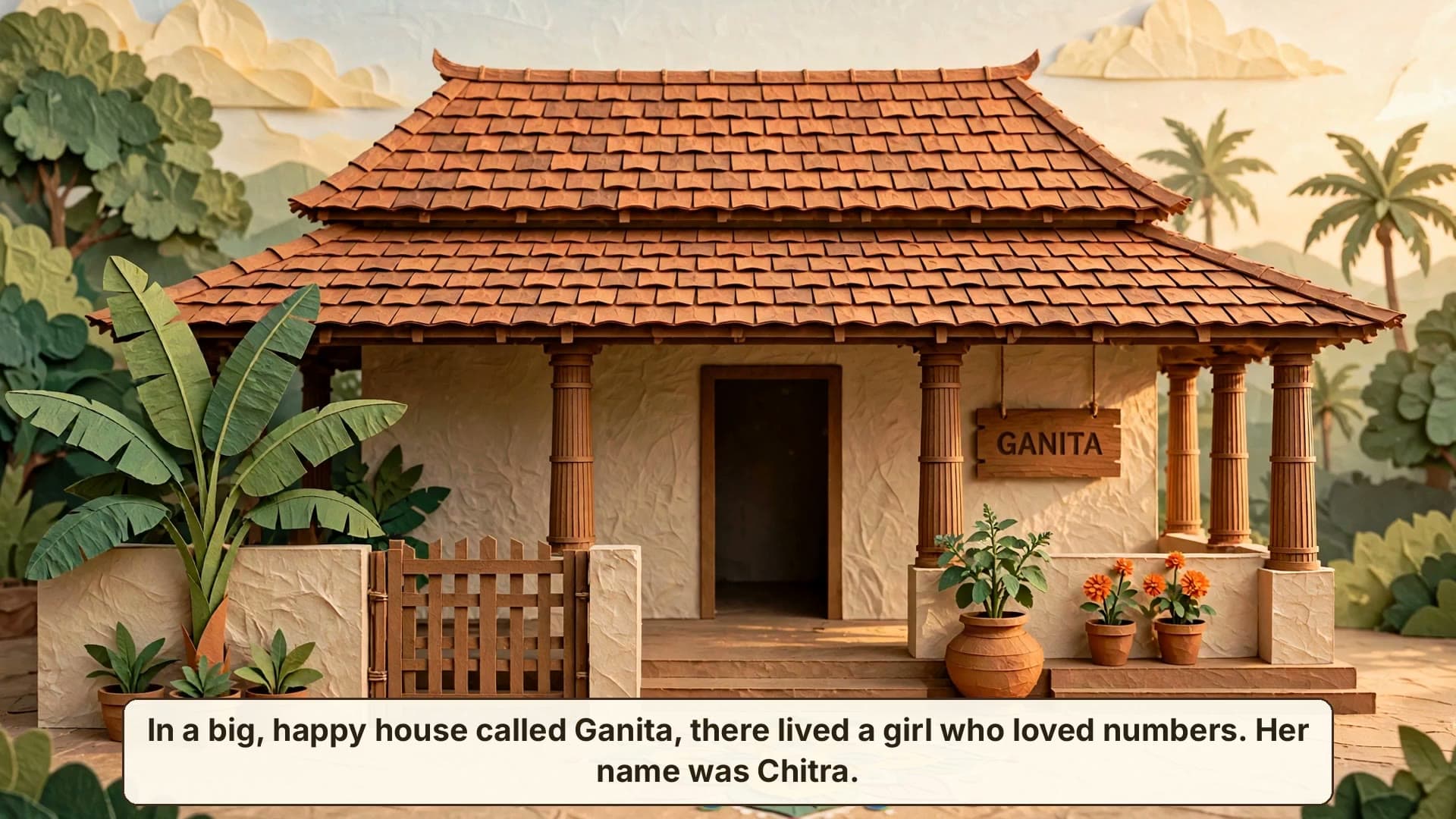
The Ganita house, with its wooden name board1
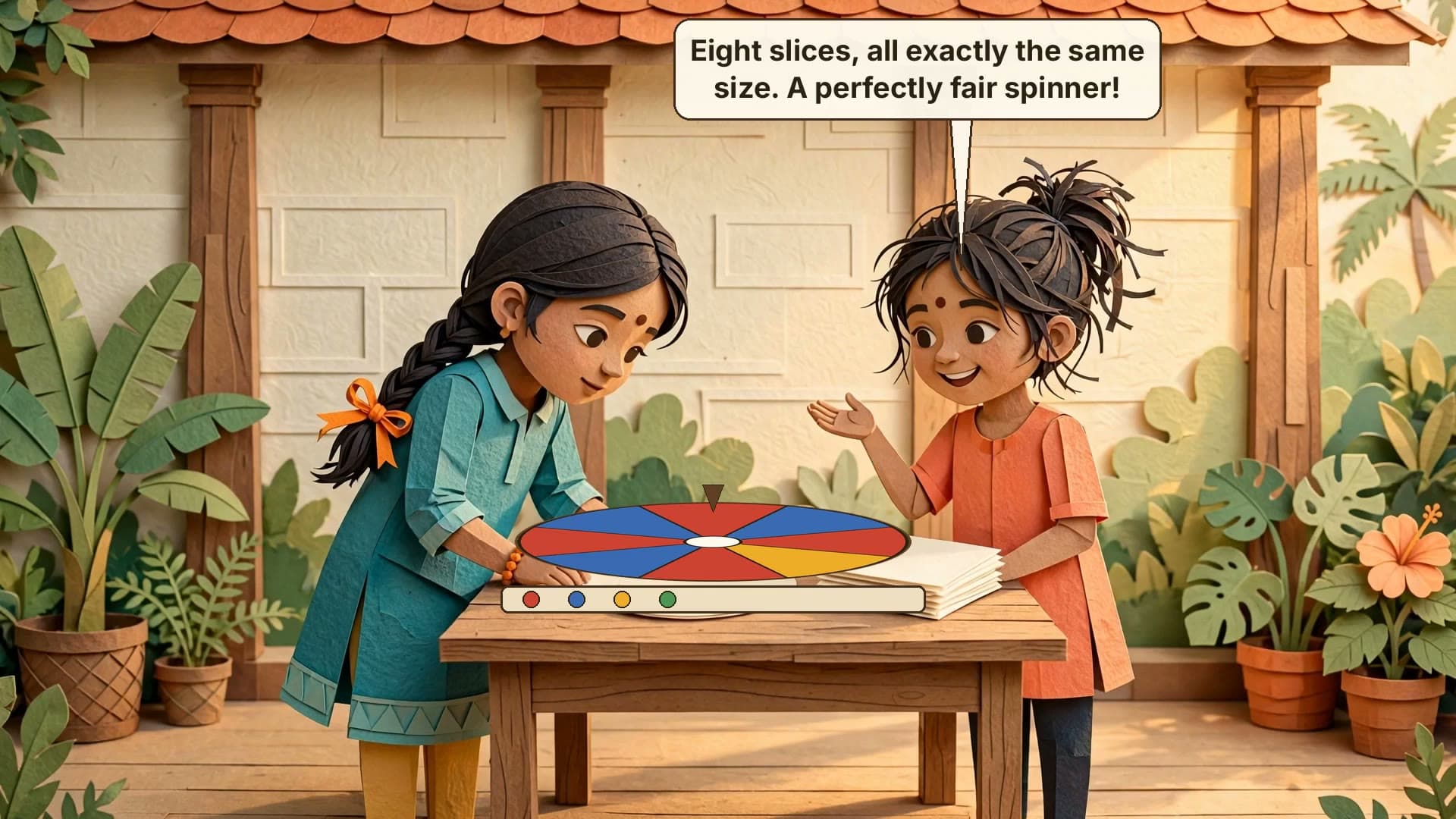
Lakshmi showing Chitra her new spinner game at the table on the veranda2
LakshmiMy new game, Chitra! Spin, and the colour you land is the colour that moves.
LakshmiEight slices, all exactly the same size. A perfectly fair spinner!
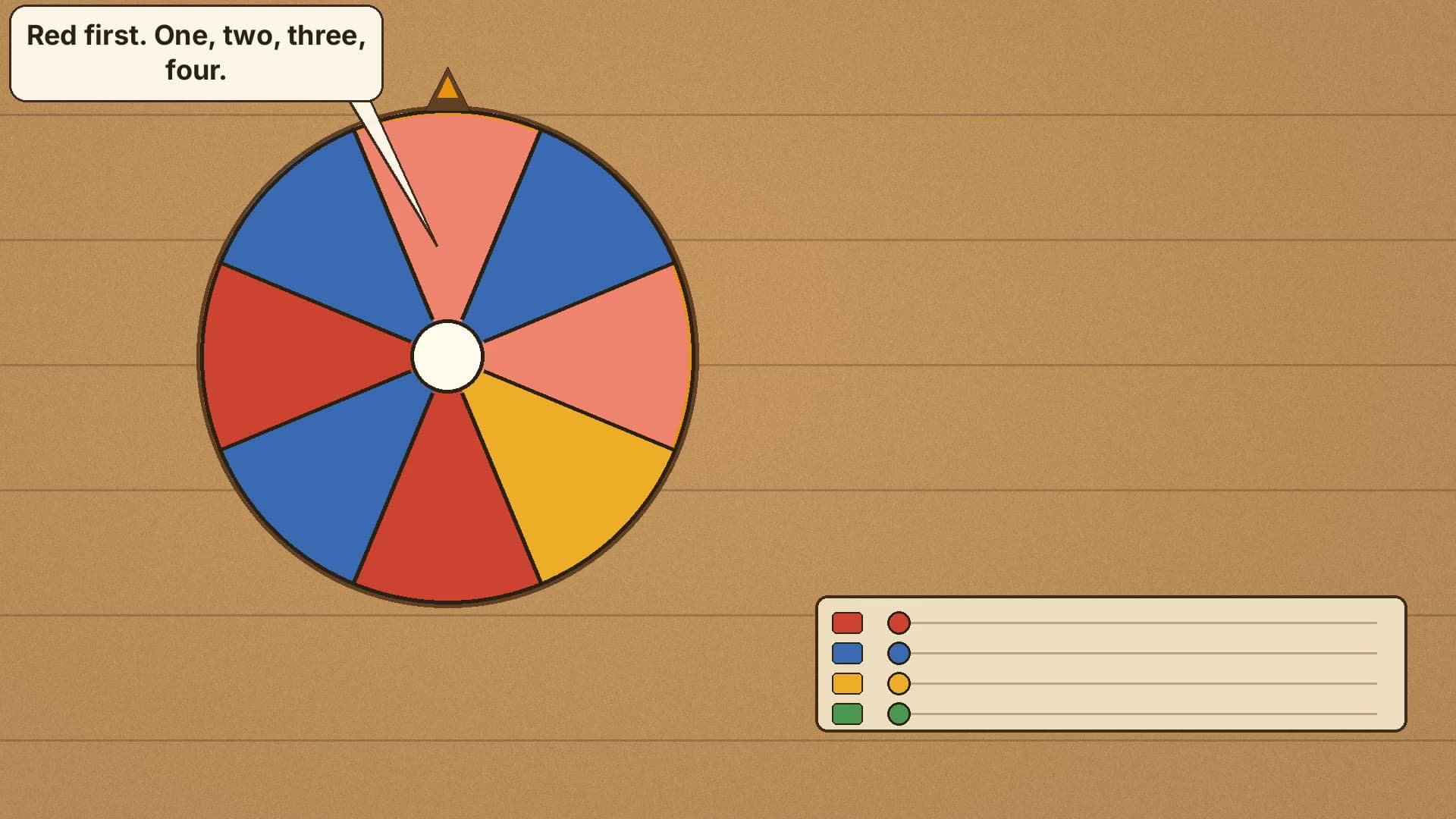
The first spinner from above as the slices are counted: four red, three blue, one yellow, and no green at all3
ChitraThe slices match. But fair is about the colours. Count them with me.
ChitraRed first. One, two, three, four.
LakshmiBlue. One, two, three.
ChitraYellow. One. Just one slice of yellow.
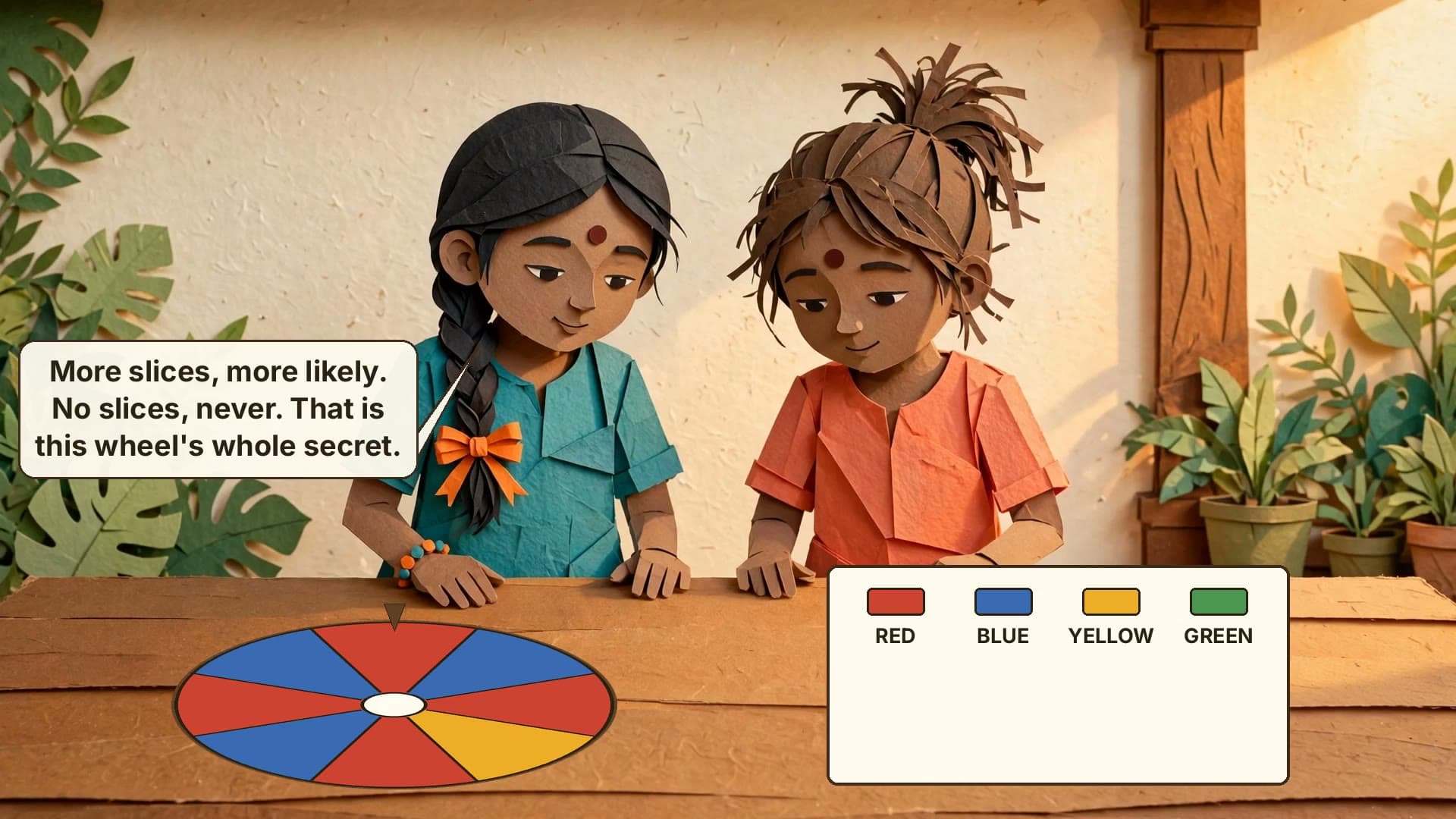
Chitra and Lakshmi at the table with the first spinner and the empty tally chart4
LakshmiAnd green? My counter's colour. I see no green at all.
ChitraZero slices of green. Green is not unlikely. Green can never come up.
LakshmiSo red is the most likely. And yellow, with one slice, is the least likely on the wheel.
ChitraMore slices, more likely. No slices, never. That is this wheel's whole secret.
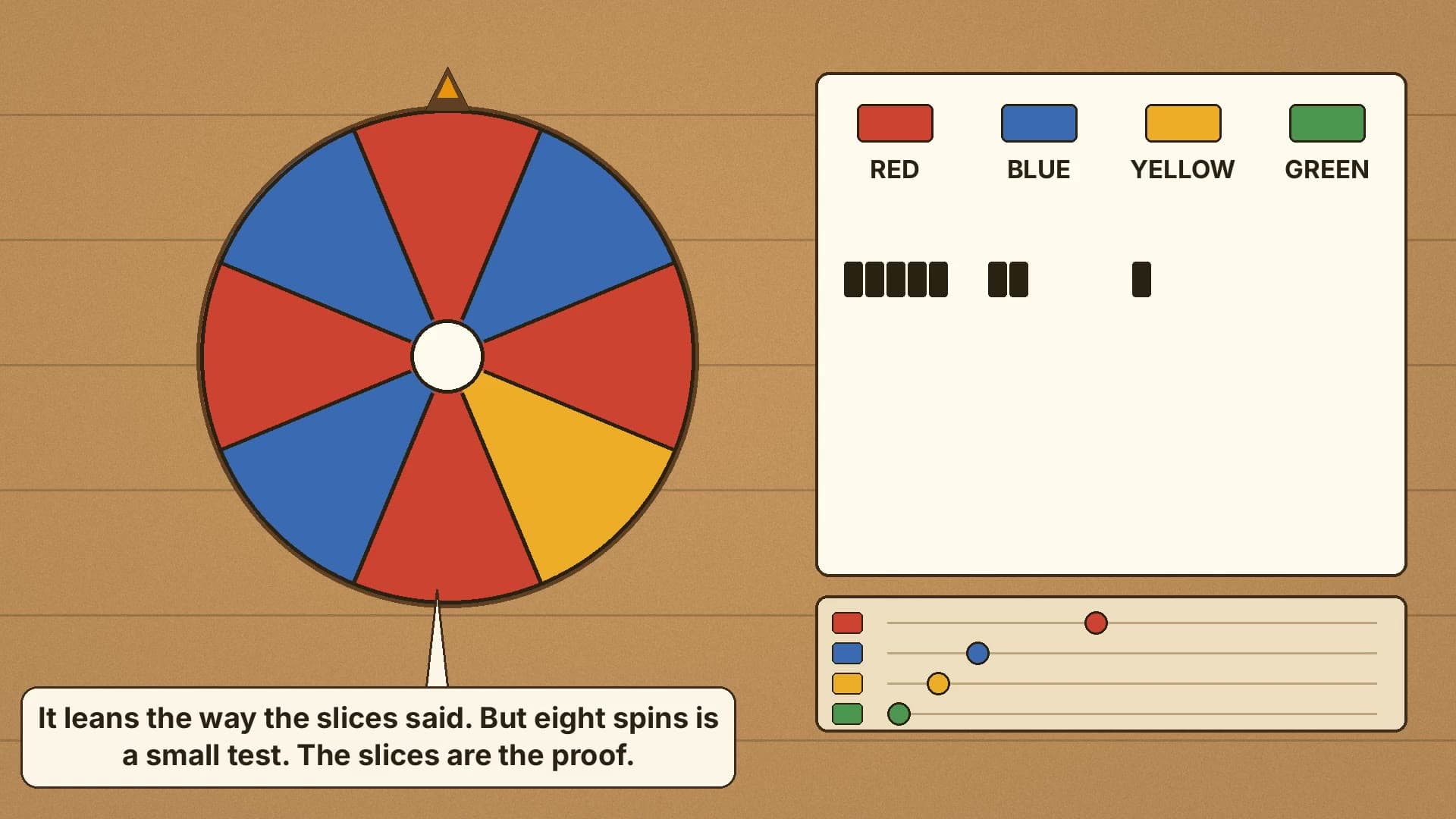
The first test finished: the tally chart reads red five, blue two, yellow one, green zero5
LakshmiThen we test it! Eight spins, and I keep the tally.
LakshmiSpin eight... red! The tally: red five, blue two, yellow one, green zero.
ChitraIt leans the way the slices said. But eight spins is a small test. The slices are the proof.
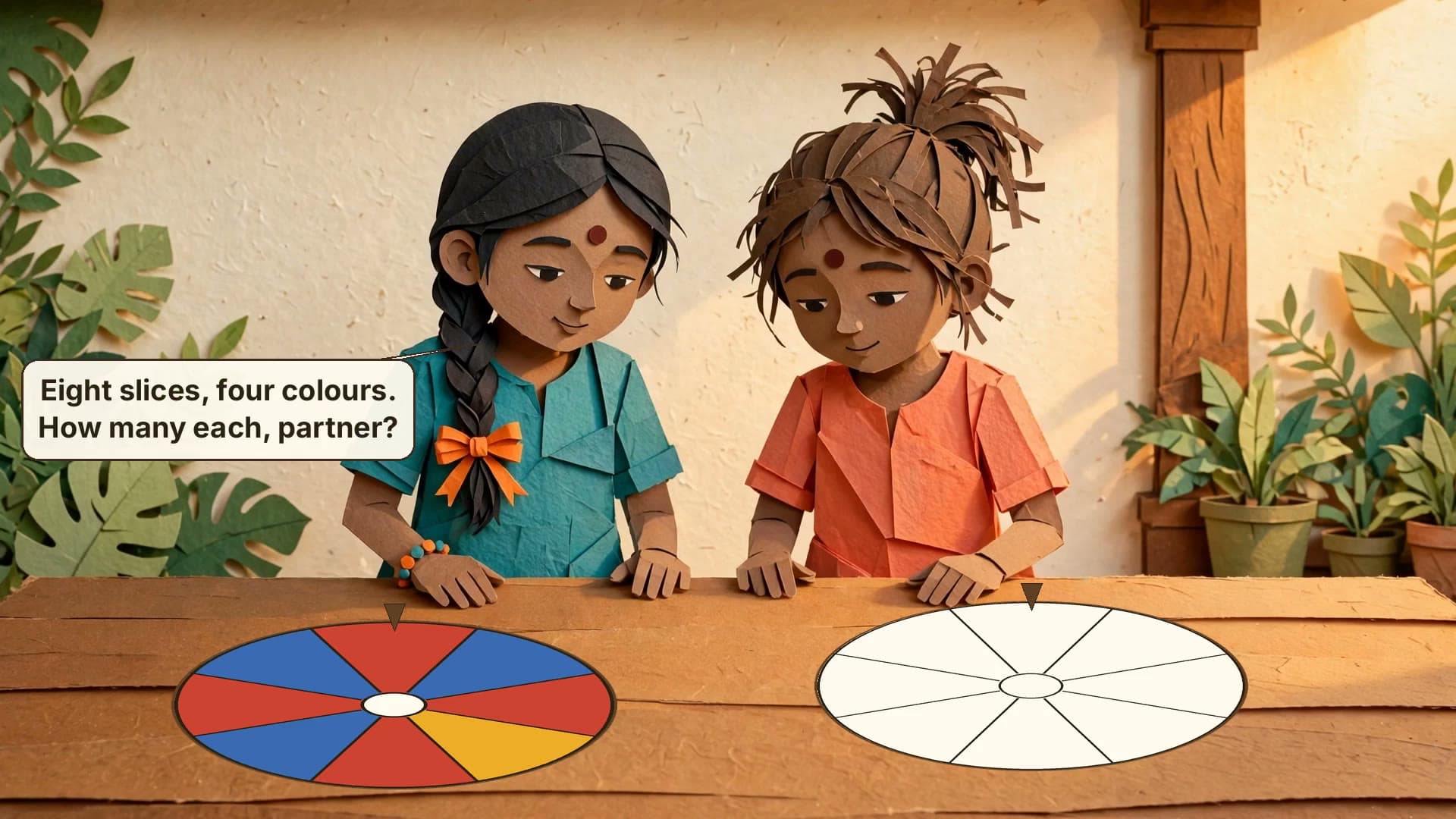
The old spinner beside the new blank wheel, ready to be painted fair6
LakshmiThen I rebuild it fair: four colours, every colour the same number of slices.
ChitraEight slices, four colours. How many each, partner?
LakshmiTwo each! Two red, two blue, two yellow, two green. Eight, shared fair.
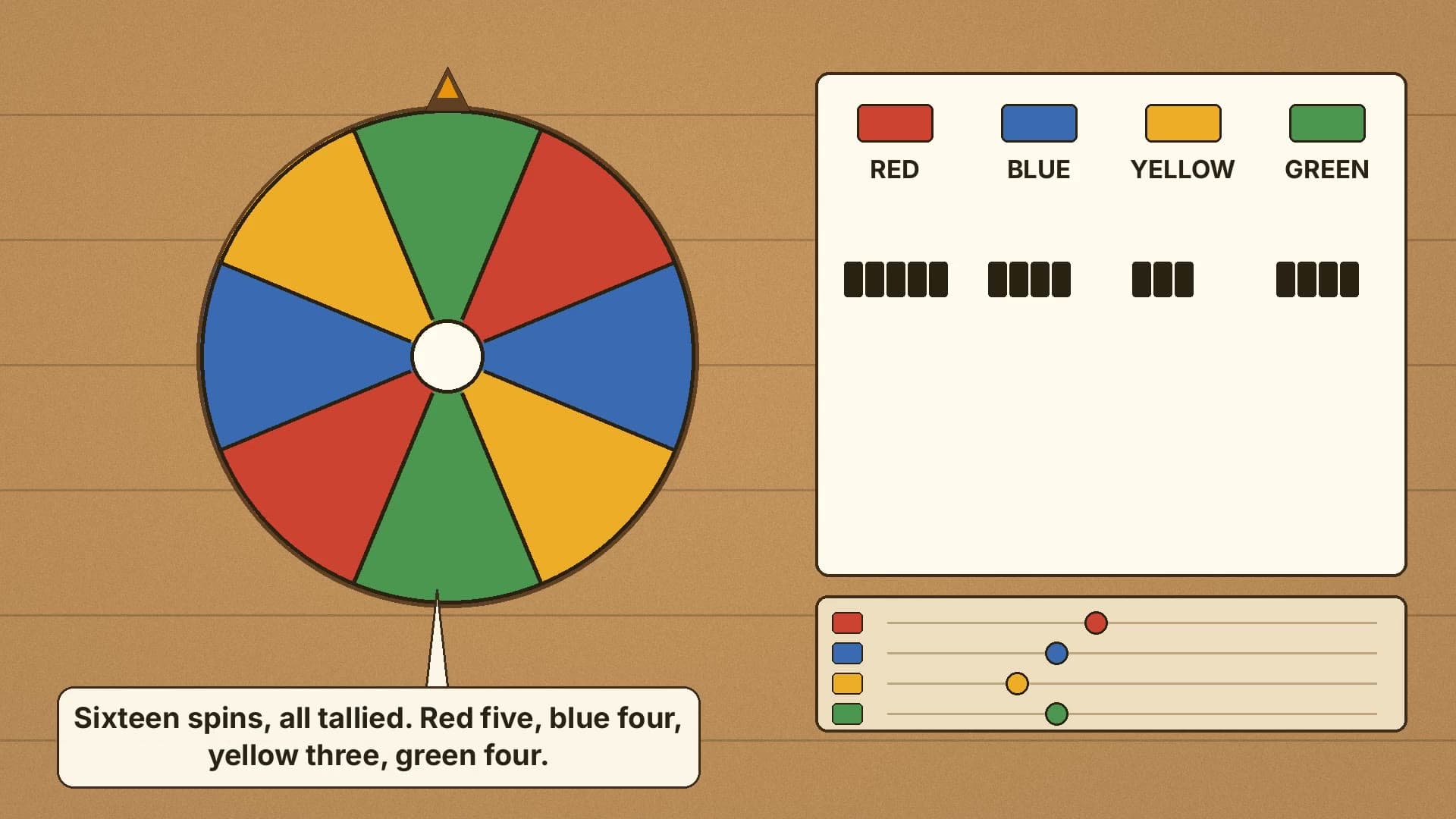
The fair spinner, two slices of every colour, and the finished tally: red five, blue four, yellow three, green four7
ChitraRed two. Blue two. Yellow two. Green two. Every colour the same. This wheel is fair.
LakshmiNow test it! Sixteen spins, Chitra. Let fair show itself!
LakshmiSixteen spins, all tallied. Red five, blue four, yellow three, green four.
ChitraClose, but not equal. Fair never promised equal tallies.
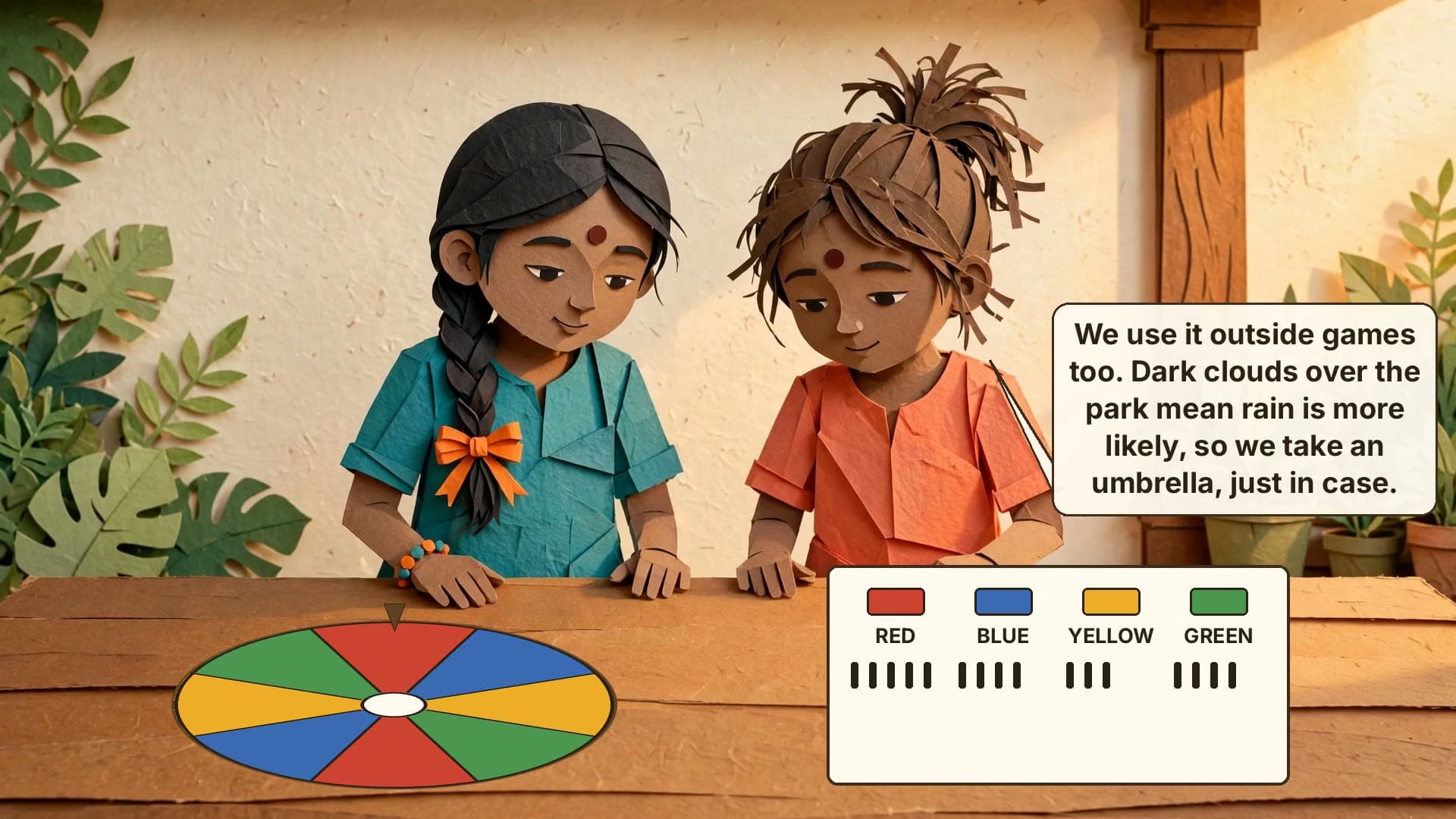
Chitra and Lakshmi with the fair spinner and the finished chart: five, four, three, four8
LakshmiCounted, rebuilt, and tested. Now my game is truly fair.
LakshmiGrown-ups call this probability. It means we count the chances first, in slices, and then we can say what is more likely, what is less likely, and what can never happen.
LakshmiWe use it outside games too. Dark clouds over the park mean rain is more likely, so we take an umbrella, just in case.
ChitraProven.

Try the math

Spin the spinner, then tally

0 of 8 spins · Red 0 · Blue 0 · Yellow 0 · Green 0

Lakshmi's first wheel: 8 slices. Red 4, blue 3, yellow 1, and green none at all.

Lakshmi's spinner

The pointer is waiting. Spin to begin.

Lakshmi's tally chart

RED

none yet

0

BLUE

none yet

0

YELLOW

none yet

0

GREEN

none yet

0

Eight spins on the first wheel. Green has no slices, so green can never land.

Your Turn

On Lakshmi's first wheel, which colour is most likely, which is least likely, and which can never land? After the rebuild, will sixteen spins give every colour exactly four?

Off-screen activity

At home: draw a circle on a paper plate and divide it into 8 equal slices. Colour 4 slices red, 3 blue and 1 yellow. Spin a paperclip around a pencil point and tally 8 spins together. Then ask: which colour has no slices, and can it ever land? Rebuild the wheel with 2 slices of each colour, adding green as the fourth colour, spin 16 times, and compare the tally.
Chitra

For parents

Today's idea was probability on a spinner. A colour's likelihood is counted in its slices: the first wheel held 4 red, 3 blue, 1 yellow and no green, so red was the most likely landing and green was impossible. Rebuilt fair with 2 slices of every colour, sixteen spins landed five, four, three and four: close, but not equal, because fair promises the same chance on every spin, never equal tallies.

Ask at dinner: what is something likely to happen tomorrow, something unlikely, and something that can never happen? How do you know?